
Roll Labels vs. Sheet Labels: Which Does Your Product Need?
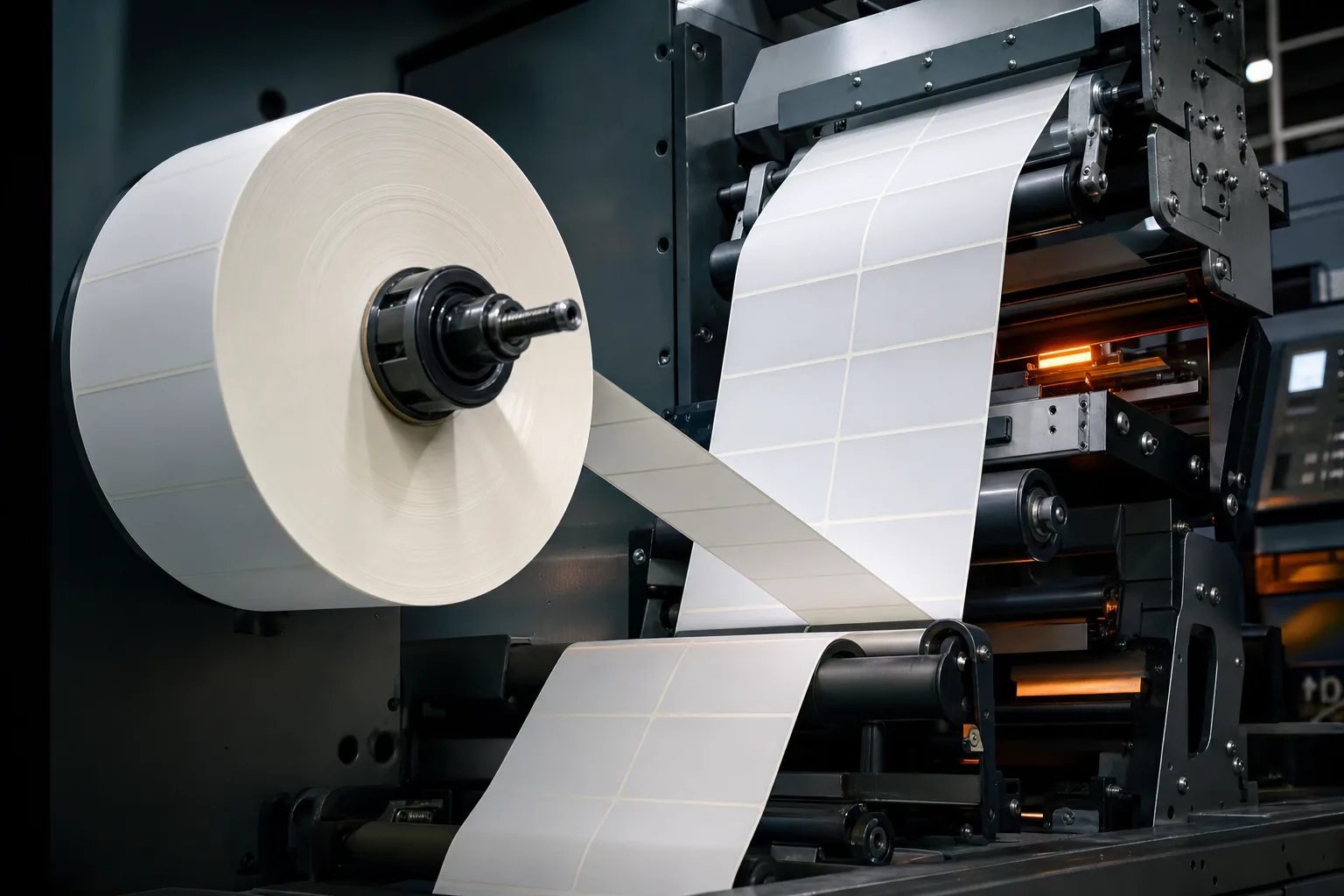
"Roll labels or sheet labels?" is one of the first questions we ask on almost every new label order — and it's rarely obvious to a first-time buyer which one actually fits their product. The two formats look similar on a screen but behave very differently in production and on the shelf. Here's how to tell them apart and pick the right one.
What Roll Labels Actually Are
Roll labels are individual labels die-cut and wound onto a continuous roll, core-out, ready to feed through a labeling machine or be peeled and applied by hand one at a time. They're the format used by co-packers, bottling lines, and any operation applying labels at volume or on a moving line.
What Sheet Labels Actually Are
Sheet labels are multiple labels die-cut onto a single flat sheet — similar to a page of stickers. They're peeled off the sheet and applied by hand, one sheet at a time, which makes them a natural fit for smaller batches, home-based fulfillment, or products labeled a few at a time rather than on a line.
The Real Decision Factor: How Will They Be Applied?
Quantity matters, but application method matters more. A run of 500 labels applied by hand at a kitchen table is often just as well served by sheets as by a roll. A run of 500 labels going through an automatic applicator absolutely needs to be on a roll — sheets simply won't feed through that equipment. If you're not sure whether you'll ever automate application, ask before ordering; it changes the format, not just the price.
Roll Labels: Where They Win
- Machine application — required for tabletop or line-speed labeling equipment
- High-volume runs — rolls scale more efficiently as quantity grows
- Consistent orientation — labels feed in a fixed, repeatable position every time
- Wound core options — inside-wound or outside-wound to match your applicator's spec
Sheet Labels: Where They Win
- Hand application — no equipment needed, just peel and place
- Small and mixed batches — easy to print a short run with several SKUs on one sheet
- Simple storage — sheets stack flat, no core or dispenser required
- Lower minimums — a practical starting point for a first production run
Core Size and Winding Direction, If You're Going With Rolls
If a labeling machine is already in the picture, get its exact specs before ordering: core diameter, wind direction (face-in vs. face-out), and roll direction all need to match the applicator or the roll won't feed correctly. This is one detail worth confirming with your equipment's manual or manufacturer rather than guessing.
Switching Formats Later
It's common to start with sheet labels while hand-applying at low volume, then move to rolls once volume justifies a labeling machine. The artwork and die line typically carry over — the main change is how the finished labels are wound and packed, not the design itself.
Get Your Roll or Sheet Labels Quoted
Use the quote builder to submit your specs for either format, or reach out directly if you're not yet sure which one fits your setup — we'll help you figure it out before anything goes to print.
Ready to Print?
Submit your specs through the quote builder, or send us the details for a hands-on quote.